Spur Gear vs Helical Gear: Which Should Your Design Use?
Specifying a gear train usually comes down to one early decision: do you use a spur gear or a helical gear? Both transmit motion between parallel shafts, both come in steel, bronze or plastic, and both are stock items at any spur gear supplier. But the way their teeth engage changes everything about noise, load capacity, efficiency and cost.
This guide gives you a side-by-side comparison and a practical decision checklist, so you can justify the choice in your design review instead of guessing.
Table of Contents
- What Is a Spur Gear?
- What Is a Helical Gear?
- Spur vs Helical: Side-by-Side Comparison
- Decision Checklist: Which One Do You Need?
- Frequently Asked Questions
- Get a Custom Quote
What Is a Spur Gear?
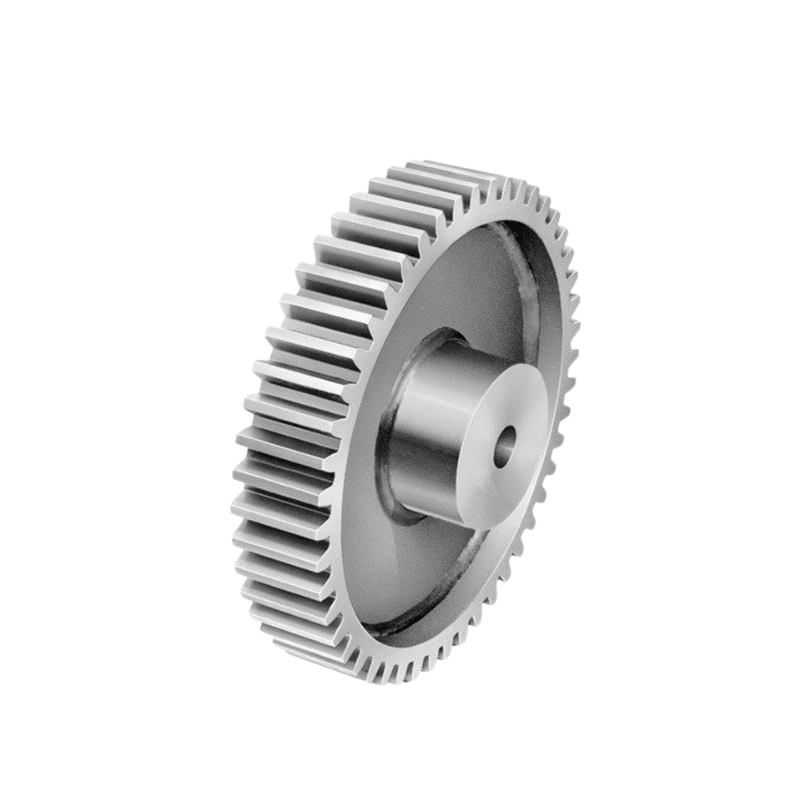
A spur gear has straight teeth cut parallel to the axis of rotation. When two spur gears mesh, the full face width of each tooth makes contact at once. That sudden, line-on-line engagement is simple and cheap to manufacture, but it creates an impact load every time a tooth enters mesh.
Spur gears dominate low-speed, low-noise-budget-insensitive applications: appliance drives, simple reducers, conveyor indexing, and any design where cost per unit matters more than acoustic comfort.
See our full range of precision hardened steel spur gears (module 0.5–10, DIN 6 / AGMA 11 available).
What Is a Helical Gear?
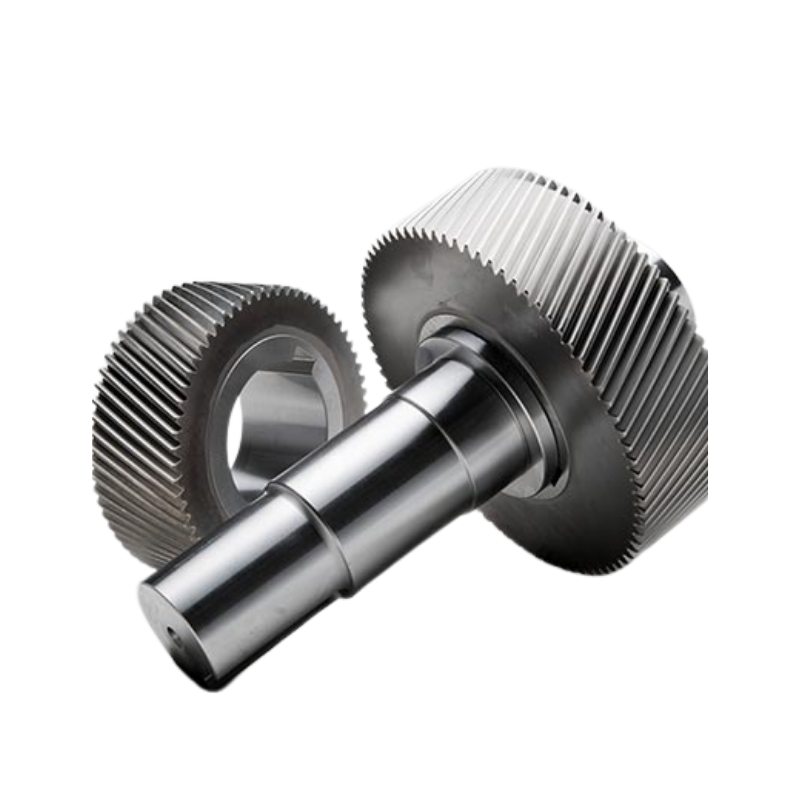
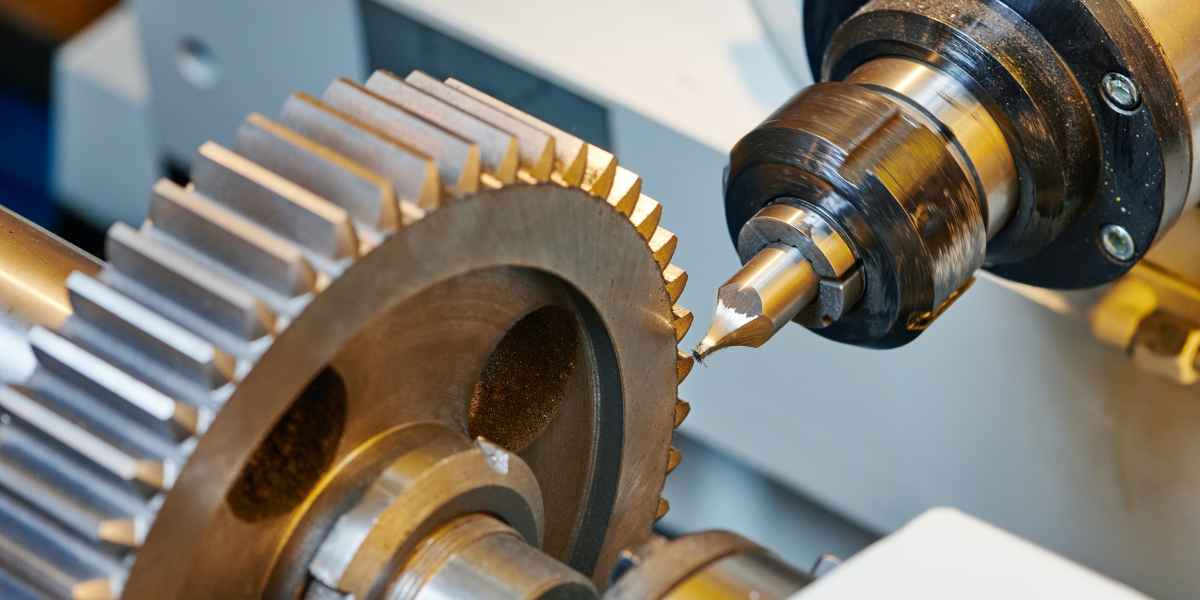
A helical gear has teeth cut at an angle (typically 15°–30° from the axis). The angled teeth engage gradually — one corner of the tooth touches first, then the contact line sweeps across the face. That progressive engagement removes the impact spike you get with spur gears.
The trade-off: the helix angle produces an axial thrust force, so a helical stage needs thrust bearings (or a double-helical / herringbone design that cancels the thrust). Helical gears also cost more to cut because the hob must be aligned to the helix angle and the geometry is harder to inspect.
For high-speed and high-load drives, browse our helical gear series built for automotive and industrial power transmission.
Spur Gear vs Helical Gear: Side-by-Side Comparison
| Factor | Spur Gear | Helical Gear |
|---|---|---|
| Tooth geometry | Straight, parallel to axis | Angled 15°–30° (helix) |
| Engagement | Full face contacts at once (impact) | Gradual, sweeping contact line |
| Noise & vibration | Higher, worse at speed | Low — quiet even at high RPM |
| Load capacity | Moderate | Higher (more teeth in contact) |
| Axial force | None | Present — needs thrust bearing |
| Mechanical efficiency | 98–99% | 96–98% (loss) |
| Relative cost | Low (baseline) | +20–40% typical |
| Typical use | Low-speed, cost-sensitive, appliances | Automotive gearboxes, turbines, high-speed drives |

Decision Checklist: Which One Do You Need?
Work through these in order. The first “yes” that points to helical usually wins:
- Is pitch-line speed above ~10 m/s (≈ 2,000 RPM on a small gear)? → Choose helical. Spur noise and wear climb sharply past this.
- Is acoustic noise a spec item (office equipment, in-cabin automotive, medical)? → Choose helical.
- Is the transmitted torque high relative to package size? → Choose helical (more teeth share load).
- Is there no room / budget for thrust bearings? → Choose spur.
- Is this a low-speed, cost-first design (appliance, toy, simple actuator)? → Choose spur.
- Does the design reverse load frequently? → Either works; helical’s gradual engagement is gentler on reversal, but verify backlash spec.
When Spur Gears Win
- Low-speed, manually operated or intermittent drives
- Cost-sensitive high-volume products where noise is not a spec
- Designs with no axial space for thrust bearings
- Easy inspection / reverse-engineering of legacy gearboxes
When Helical Gears Win
- Automotive transmissions and differentials
- Industrial drives running continuously at speed
- Quiet servo and robotics actuators (see our gearbox range)
- High-torque reducers where package size is fixed
Frequently Asked Questions
Which is more efficient, spur or helical gear?
Spur gears are marginally more efficient — about 98–99% versus 96–98% for helical. The difference comes from sliding contact along the helix angle in helical meshes. In most drives the noise and load benefits of helical far outweigh the 1–3% efficiency loss.
Why are helical gears quieter than spur gears?
Spur teeth engage the full face width simultaneously, causing an impact load and a characteristic “gear whine.” Helical teeth engage gradually at a corner and the contact line sweeps across, so the load ramps up smoothly. Less impact means less vibration and lower radiated noise, especially above 2,000 RPM.
Are helical gears stronger than spur gears?
Generally yes, for the same size and material. The angled teeth keep more tooth pairs in contact at once, spreading load over a larger area. That higher contact ratio raises both load capacity and fatigue life — which is why helical gears are the default in automotive and turbine drives.
Can I directly replace a spur gear with a helical gear?
Not as a drop-in swap. A helical gear generates axial thrust, so the shaft and bearings must be redesigned to handle it. You also need matching helix angle and hand (left/right) on the mating gear, and the centre distance stays the same only if module and tooth count are identical. Treat it as a re-design, not a substitution.
Which costs more to manufacture?
Helical gears typically cost 20–40% more than an equivalent spur gear. The premium covers helix-aligned hobbing, harder inspection, and the thrust-bearing hardware the assembly now requires. For low-speed, cost-first products, spur remains the economical choice.
Get a Custom Quote
Still deciding? Send us your shaft distance, torque, speed and noise target and our engineering team will specify spur vs helical — and the exact module, material and hardness — for your drive. Request a custom gear quote and we’ll respond with a datasheet and RFQ number.
Himax Gear is a China-based precision gear manufacturer, ISO 9001:2015 certified, producing spur, helical, bevel, worm and rack gears since 1995 (founding year to be confirmed). Learn more on our About page.
Leave a Reply