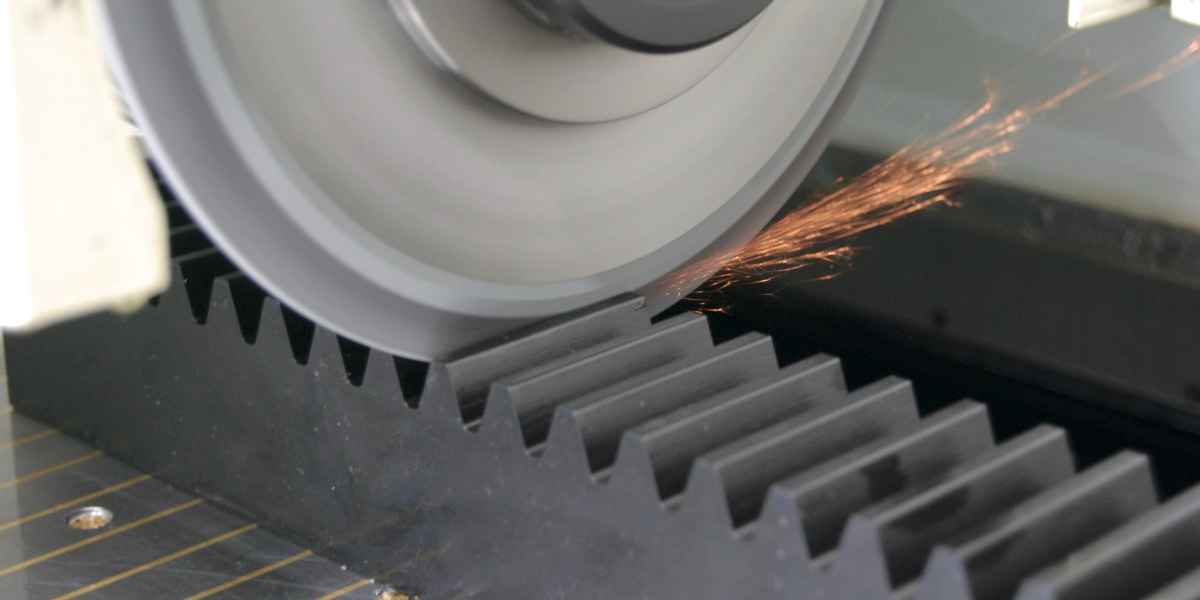
When a design has to turn power through 90° and change speed at the same time, two gear types usually land on the shortlist: the worm gear and the bevel gear. They look nothing alike and they behave nothing alike. A worm set can deliver a 100:1 reduction in a single stage and then lock itself against back-driving; a bevel set ships torque cleanly around a right-angle corner at near-spur efficiency. Pick the wrong one and you either burn efficiency you cannot spare or lose the self-locking safety feature your lift depends on.
This guide compares tooth action, efficiency, self-locking, ratio range and cost, then gives you a decision checklist you can defend in design review instead of guessing.
Table of Contents
- What Is a Worm Gear?
- What Is a Bevel Gear?
- Worm vs Bevel: Side-by-Side Comparison
- Self-Locking: The Worm’s Killer Feature
- Decision Checklist: Which One Do You Need?
- Frequently Asked Questions
- Get the Selection Table
What Is a Worm Gear?
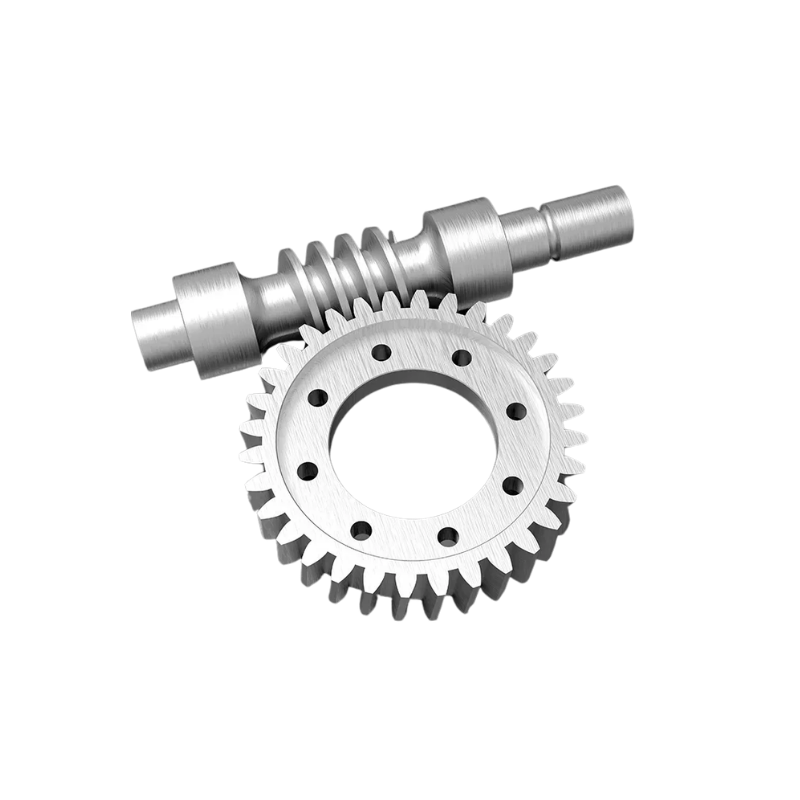
A worm gear is a screw (the worm) meshing with a worm wheel — a gear whose teeth are cut to match the worm’s lead angle. The two shafts are non-intersecting and usually at 90°. As the worm turns, its thread advances the wheel by one tooth per input revolution on a single-start worm, which is exactly why a small input rotation produces a large output reduction. That geometry is the worm’s whole personality: enormous ratios in one compact envelope.
Worm sets are the default choice wherever a high reduction and a right-angle layout must live in a small package — think conveyor drives, gate operators, lift jacks and tuning stages. Browse our full range of precision worm gear sets (bronze worm wheels paired with hardened steel worms, module 0.5–10).
What Is a Bevel Gear?
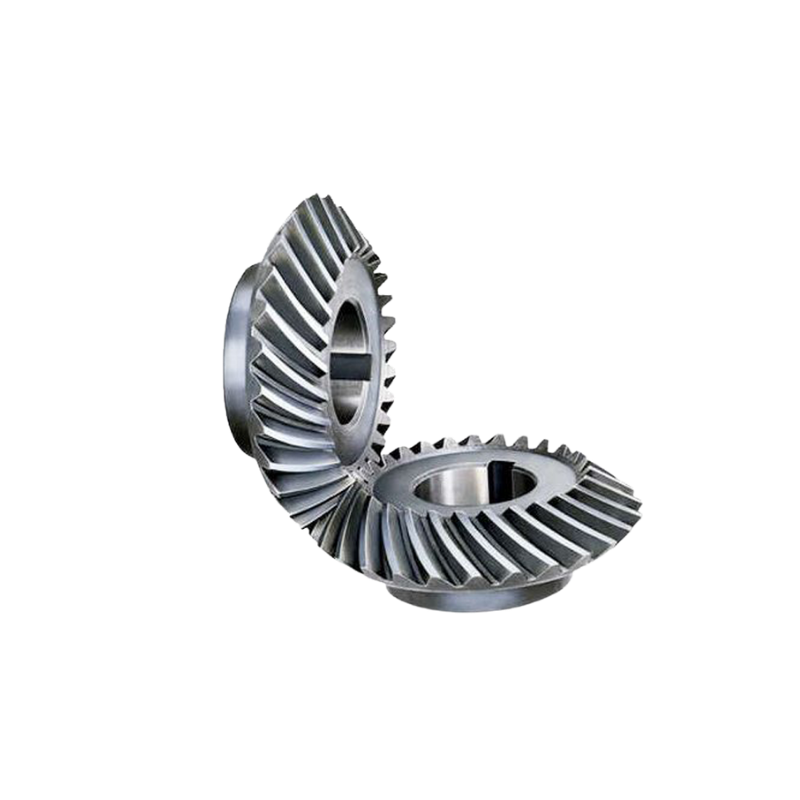
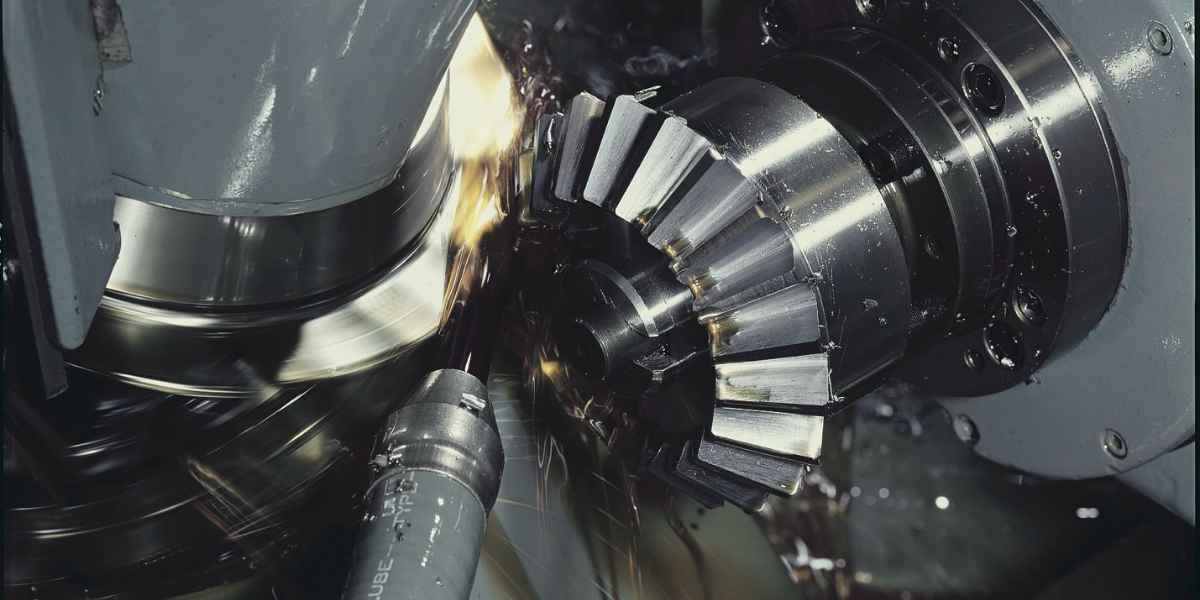
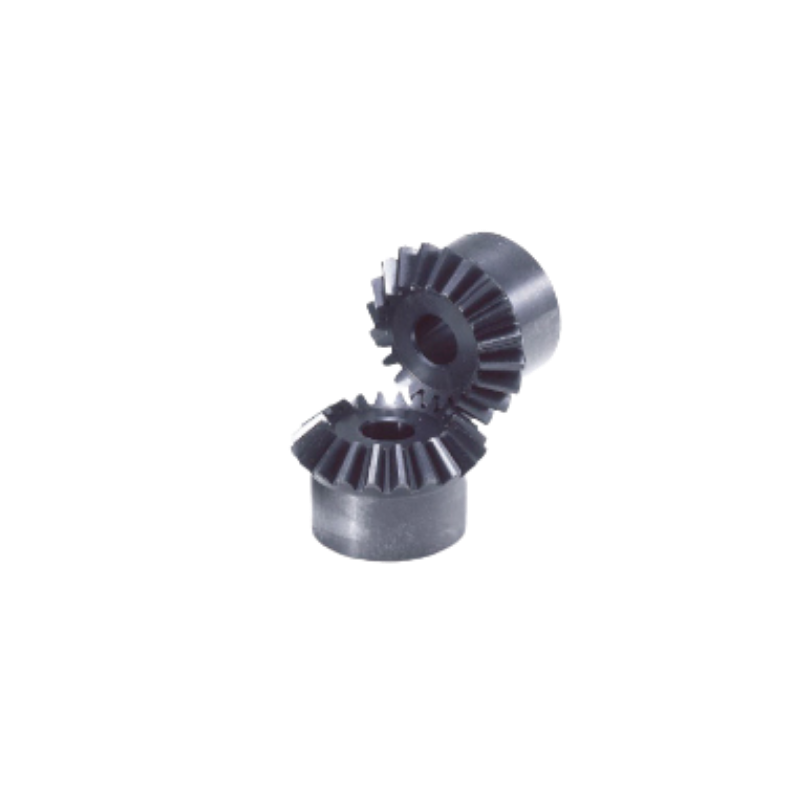
A bevel gear has teeth cut on a conical blank so that two shafts meeting at an angle — typically 90°, but any angle is possible — can transmit motion. Straight bevels are the simple, low-cost form. Spiral bevels have curved, angled teeth that engage gradually, giving lower noise and higher load capacity, much like the helical-versus-spur story you already know from our spur vs helical guide.
Bevels roll more and slide less than worms, so they run at 95–98% efficiency and handle high speed and high torque without the heat penalty. The trade-off is a modest ratio per mesh — usually up to about 6:1 without adding a second reduction stage — and a higher cutting/inspection cost for spiral forms. For intersecting right-angle drives, see our bevel gear series and the 1:1 miter gears for simple right-angle speed transfer.
Worm Gear vs Bevel Gear: Side-by-Side Comparison
| Factor | Worm Gear | Bevel Gear |
|---|---|---|
| Shaft arrangement | Non-intersecting, offset 90° | Intersecting, 90° (or other angle) |
| Typical ratio per stage | Up to 100:1 (single stage) | Up to ~6:1 (single mesh) |
| Efficiency | 30–90% (slides, runs warm) | 95–98% (rolls) |
| Self-locking | Possible (shallow lead angle) | No |
| Noise | Low when lubricated | Low–moderate (spiral = quiet) |
| Speed capability | Low–moderate | High |
| Back-driving | Prevented (self-locking) | Free |
| Relative cost | Moderate (bronze wheel adds cost) | Higher for spiral bevel |
| Typical use | Lifts, gates, jacks, conveyors, indexing | Differentials, power tools, right-angle gearmotors |

Self-Locking: The Worm’s Killer Feature
Self-locking is what makes worm gears special. When the worm’s lead angle is shallow enough that the friction angle exceeds it, the worm wheel cannot drive the worm backward — the mechanism holds a load with no brake. This is why worm gears appear in hoists, lifts, jacks and gate operators: a dropped load cannot spin the input shaft.
The catch is efficiency. A self-locking worm is the least efficient form, often 30–50%, because the same shallow lead angle that prevents back-driving also maximizes sliding. If you do not need self-locking, a steeper lead angle (or a non-self-locking worm) recovers efficiency toward 90% — but you then need a brake or counterweight to hold position. Design the lead angle to the requirement, not by default.
Decision Checklist: Which One Do You Need?
Work through these in order. The first constraint that points to one type usually wins:
- Must the load hold position with no brake? → Choose worm (self-locking).
- Is efficiency or heat a hard constraint? → Choose bevel (95–98%, runs cool).
- Is the ratio above ~6:1 from a single mesh? → Choose worm, or a bevel plus a second reduction stage.
- Are shafts intersecting exactly at 90° in a tight package? → Choose bevel or miter (1:1).
- Is the duty high-speed or high-cycle? → Choose bevel; worms wear faster under continuous load.
- Is it low-duty, low-ratio, cost-first, right-angle? → Choose straight bevel or miter.
When Worm Gears Win
- Hoists, lifts, jacks and gate operators where self-locking is a safety feature
- Tuning and positioning stages where back-driving is undesirable
- Compact high-ratio reductions in a single envelope
- Low-duty, intermittent, cost-sensitive right-angle drives
When Bevel Gears Win
- Automotive differentials and power take-offs
- High-speed power tools and right-angle gearmotors
- Continuous-running right-angle drives where efficiency matters
- 1:1 right-angle transfers (miter gears)
Frequently Asked Questions
Which is more efficient, worm or bevel gear?
Bevel gears are far more efficient — about 95–98% versus 30–90% for worm sets. Worm efficiency drops with ratio and especially with self-locking designs, because shallow lead angles maximize sliding contact.
What does self-locking mean in a worm gear?
Self-locking means the worm wheel cannot drive the worm backward, so the mechanism holds a load without a brake. It occurs when the worm’s lead angle is shallow relative to the friction angle. The cost is low efficiency, often 30–50%.
Can a bevel gear replace a worm gear?
Only if you do not need self-locking and your ratio fits a single bevel mesh (about up to 6:1) or you add a second reduction stage. A bevel cannot hold position against back-driving the way a self-locking worm can, so lifting and holding applications still need the worm — or an external brake.
When should I use a worm gear instead of a bevel gear?
Use a worm when you need a large single-stage reduction (roughly 20:1–100:1), self-locking, or a compact right-angle package and can tolerate lower efficiency and some heat. If efficiency and speed dominate, reach for a bevel.
Why do worm gears run hotter than bevel gears?
Severe sliding contact at the worm-wheel mesh dissipates more power as heat than the rolling action of a bevel mesh. Proper lubrication, correct oil viscosity and appropriate derating are essential; bevels roll more and stay cooler under the same load.
Get the Selection Table
Want the numbers on one sheet? We’ve built a Worm vs Bevel selection table — ratio limits, efficiency curves and material notes side by side. Send us your shaft angle, required ratio, torque and duty cycle, and our engineering team will specify the right set plus the exact module, material and hardness. Request the selection table and a custom gear quote and we’ll respond with a datasheet and RFQ number.
Himax Gear is a China-based precision gear manufacturer, ISO 9001:2015 certified, producing worm, bevel, miter, helical, spur and rack gears since 1995 (founding year to be confirmed). For gearing standards referenced above, see the AGMA resource library. Learn more on our About page.
Leave a Reply